





Casino Sites in Algeria 2026

Expert review by: Fadi Al-Falih
Is gambling legal in Algeria
In Algeria, gambling is generally illegal, and there is no open licensing market for online casinos. The core rule is in Article 612 of the Algerian Civil Code: games of chance and betting are prohibited, with narrow exceptions for race betting and Algerian sports betting.
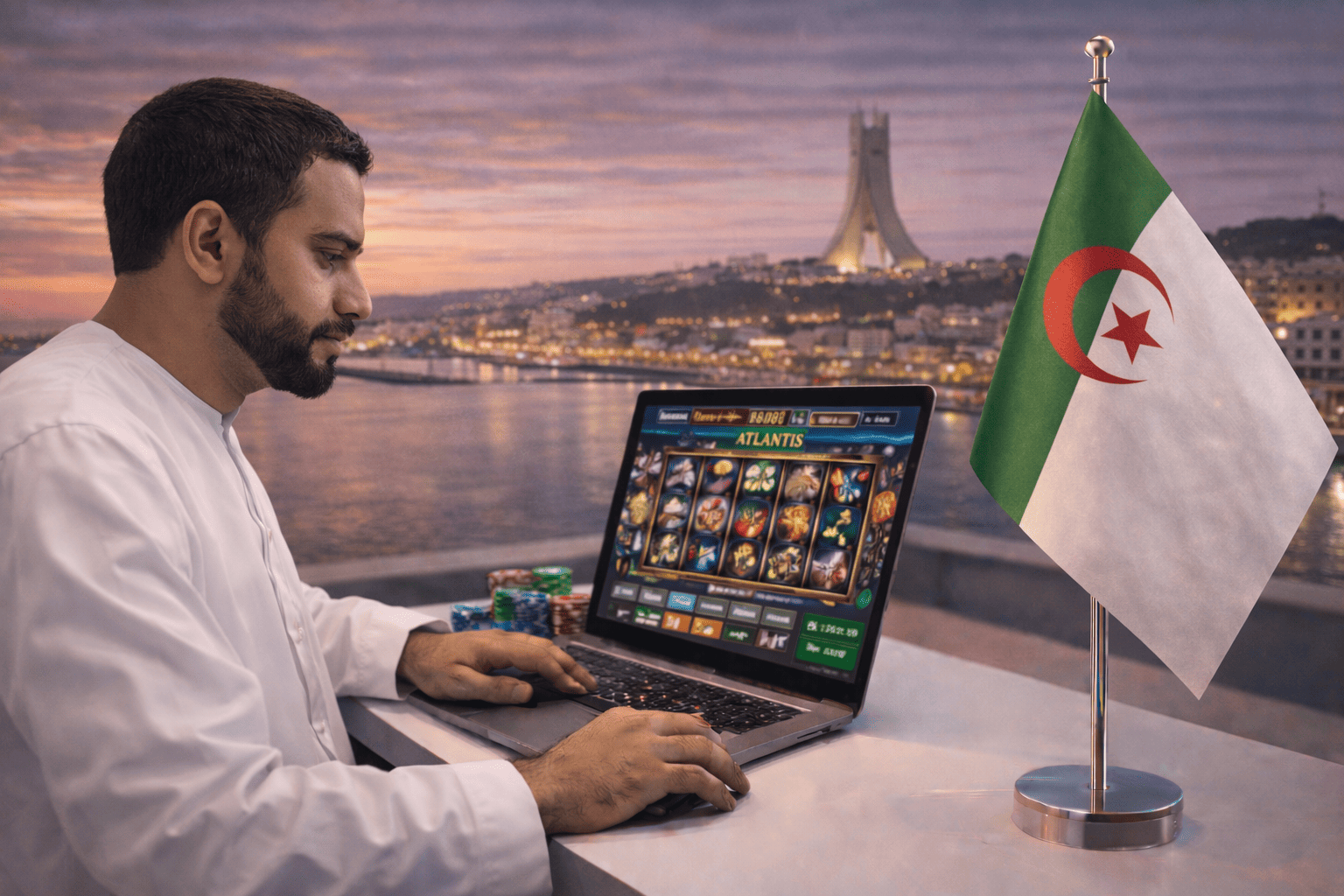
Those exceptions are not a general permission for private casinos or offshore gambling sites: the official 1966 instrument creating Pari Sportif Algérien placed it under the supervision of the Minister of Youth and Sports and gave it a state-controlled mission to organize sports-prediction contests.
Online gambling is even more clearly restricted. Algeria’s e-commerce framework prohibits transactions made through electronic communications when they relate to games of chance, betting, or lotteries; Algeria’s Ministry of Commerce describes the same prohibition in its official explanation of the e-commerce law.
The Penal Code also criminalizes unauthorized gambling houses, showing that enforcement risk is aimed at unapproved gambling operations rather than a permissive casino market.
| Field | Algeria |
|---|---|
| GEO | Algeria |
| Legality status | Online casinos are not legally licensed; gambling is broadly prohibited except narrow state-controlled betting exceptions. |
| Player access to foreign websites | ✅ |
For offshore play, the practical takeaway is: Algerian players may still be able to access foreign casino websites technically, but those sites are not locally licensed, not recognized by an Algerian online casino regulator, and do not benefit from Algerian consumer-protection or dispute-resolution mechanisms.
Deposits, withdrawals, bonuses, KYC disputes, and account closures are therefore handled under the offshore operator’s own jurisdiction, not under an Algerian licensing framework. Accessibility should not be treated as legality.
Overview of Offshore Brands in the Algeria
| Casino | Bonus | Payout | Pay-time | Deposit options | Brand review |
|---|---|---|---|---|---|
| Lucky Dreams | 100% up to €/$500 + 100 free spins on the first deposit; 40x wagering; minimum deposit €/$20; max cashout from the first-deposit bonus €/$5,000. | Minimum withdrawal usually €/$20; listed maximum withdrawal limits include €/$4,000 per day, €/$8,000 per week, and €/$30,000 per month. | Deposits are generally credited immediately; withdrawal speed depends on payment method and provider checks. | EUR, USD, CAD, AUD, NZD, NOK, ZAR, USDT, BTC, ETH, LTC, BCH, XRP, BNB, DOGE, TRX, ADA and other listed currencies. | Strong offshore casino package with a broad bonus ladder, crypto support, clear withdrawal caps, and Curacao licensing; players should check country restrictions before depositing. |
| BetOBet | Current market snapshots list a €500 welcome bonus, 150% bonus structure, €10 minimum deposit, promo code WINVIP1, and 35x wagering. | Public review data reports no withdrawal until wagering is completed; payment-method availability varies by country and account status. | Recent payment summaries describe crypto as the fastest option, with some methods potentially taking up to several days. | Visa, Mastercard, Skrill, Neteller, ecoPayz, Trustly, WebMoney, Qiwi, Jeton, MuchBetter, Sofort, Bitcoin and Litecoin are listed in current review snapshots. | Hybrid sportsbook-casino brand with crypto and fiat rails; useful for players who want one account for sports and casino, but official public payment pages were not fully accessible during review. |
| Stake | Uses promotions, races, VIP rewards, rakeback, reloads and referral-code welcome offers rather than one fixed public casino welcome package. | No maximum crypto withdrawal cap is stated in Stake’s payment guide; each cryptocurrency has its own minimum withdrawal and network fee. | Crypto withdrawals are described as immediate; bank transfers can take up to 3 business days, and support should be contacted if approval exceeds 3 business days. | Crypto deposits include BTC, ETH, LTC, DOGE, BCH, TRX, EOS, USDT, BNB, USDC, SOL, XRP and more; local-currency routes may use cards, Apple Pay, Google Pay, SEPA, UK Faster Payments or PIX through providers. | Large crypto-first casino and sportsbook with frequent promotions, VIP rewards, Stake Originals, live casino, and Curacao licensing; best fit for crypto-first offshore users. |
| BetFinal | Casino bonuses require a $10 minimum deposit; deposit plus bonus must be wagered 35x within 15 days; maximum casino slot stake while wagering is $5. | Withdrawals must generally return to the same account used for the winning deposit; unwagered deposited funds are normally not withdrawable without an exception and possible 10% fee. | The site promotes instant cashout language, but actual payout routing depends on KYC, AML checks, and the original deposit method. | BetFinal states that it supports various payment methods including PayPal, Visa and e-wallets; crypto payments are also covered in its terms. | Offshore casino and sportsbook with live casino, slots, table games, esports and Curacao licensing; suitable for users who want sports plus casino, but bonus contribution rates are restrictive for live casino. |
We review all online casinos on our project by checking bonus rules, payout limits, payment speed, deposit methods, license notes, and offshore availability for Algeria-focused players.
Algeria payment methods
Law 18-05 prohibits electronic transactions linked to gambling, betting and lotteries, Visa classifies online gambling as MCC 7995, and Algeria’s 2025 Law No. 25-10 prohibits issuing, buying, selling, using, holding, trading, promoting, mining or creating exchange platforms for virtual assets.
Visa / Mastercard debit cards: In the cashier, the player enters card details and completes bank authentication/OTP; deposit authorization is normally instant, card withdrawals depend on Visa Direct or Mastercard Send availability and can be near-real-time or routed over slower settlement, with no fixed casino-side fee but possible issuer FX, gambling-MCC decline or card-network limits.
Visa / Mastercard credit cards: In the cashier, the flow mirrors debit cards, but gambling MCC 7995 can be treated as restricted, high-risk or cash-like by issuers; deposits can authorize instantly, payouts are issuer/acquirer-dependent, and fees may include FX, cash-advance-style charges or bank rejection costs.
American Express: N/A.
Apple Pay: N/A.
Google Pay: In the cashier, Google Pay opens a wallet sheet and tokenizes a saved card for checkout; Google lists Algeria for online/in-app payments, so deposits are typically instant where the merchant enables it, while withdrawals usually return through the underlying card or bank route, with issuer FX or card fees still possible.
Samsung Pay: N/A.
Bank transfer: In the cashier, the player receives bank instructions or is redirected to a banking flow, then the casino credits funds after matching the transfer; international bank transfers commonly take 1–5 business days, and fees depend on the sending bank, correspondent banks and currency conversion.
Cryptocurrency payments: N/A.
Skrill: In the cashier, the player selects Skrill, logs in and pays from wallet balance or a linked funding source; merchant payments are wallet-based and usually immediate after approval, while Skrill says paying merchants from Skrill balance is free, although FX, funding, inactivity or merchant-side fees may still apply.
Neteller: In the cashier, the player logs into Neteller and pays from wallet balance or an available funding option; Neteller describes merchant website payments as wallet-based and instant in supported flows, with paying online from Neteller balance free on Neteller’s side but possible FX, funding, verification or merchant fees.
ecoPayz: In the cashier, ecoPayz works as a wallet redirect where the player logs in and sends funds to the merchant; Payz states transfers to and from Payz merchants are free across account levels, money transfers can be instant, and service availability, FX and deposit-method fees vary by residence.
Paysafecard: N/A.
Responsible Gambling in Algeria (Play responsibly)
Algeria has no local online-casino licensing route; use responsible gambling habits: set a fixed weekly budget, treat play as paid entertainment, never chase losses, take 15–30 minute breaks, and stop once your preset win/loss limit is reached. WHO reported more than 34,000 people treated at Algerian addiction facilities in 2023, so support access matters.
Helplines:
- GamCare UK: 0808 8020 133
- BeGambleAware: 0808 8020 133
- Gamblers Anonymous International: +1 909 931 9056
- Algeria Arabic psychological support: 1005 / 021 78 29 67
18+ only. Gambling can be addictive; stop and seek help if play stops feeling controlled.
Offshore license reality
Offshore licenses do not make an online casino locally legal in Algeria. Algeria’s Civil Code prohibits gambling and betting except limited horse-racing and sports-betting carve-outs, online gambling is not regulated, and there is no dedicated gambling regulator or licensing framework.
Algeria’s e-commerce law also bans electronic transactions for games of chance, betting and lotteries. A Curaçao license, for example, authorizes operation “in or from Curaçao,” not Algeria.
VPN access pattern
For Algeria players, a VPN may mask the local IP during sign-up, login or cashier access, but it does not change the legal position: Algeria prohibits e-commerce transactions linked to gambling, betting and lotteries, and online gambling is not locally regulated.
Offshore operators can still run KYC, payment-owner and country checks; mismatches may trigger blocked deposits, frozen withdrawals or account closure.
How to play in Algeria using cryptocurrency
Algeria risk note: Law 18-05 bans electronic transactions for gambling, betting and lotteries, and Finance Law 2018, Article 117 bans buying, selling, using or holding virtual currency.
- Crypto wallet: legally high-risk for Algeria players.
- Register offshore; do not use VPN to bypass rules.
- Verify with real Algeria ID data.
- Deposit BTC, USDT or another listed coin if allowed.
- Play slots, roulette, blackjack or live dealer games.
- Withdraw to the same crypto method after KYC.
Can Algeria players use DZD in online casinos
Usually, no: DZD is Algeria’s domestic currency, but offshore casino cashiers rarely price balances in Algerian dinar; they more often use EUR, USD, USDT, BTC or other international currencies.
Bank of Algeria’s daily table lists DZD exchange rates, including USD 132.7380 and EUR 154.4407 on 19 May 2026, so DZD-funded deposits normally involve conversion before or during payment processing.
Legally, this does not create local permission: Algeria prohibits electronic transactions for gambling, betting and lotteries, and online gambling is not locally regulated.